Parents and families
Thank you for your interest in the BLUEPRINT Study.
This study is recruiting babies that are/will be born prematurely. We hope that the Frequently Asked Questions (FAQs) on this page will address any questions you may have.
If you cannot find the information you are looking for on this page, please feel free to contact us here
Most (very) premature babies have breathing problems shortly after birth, and many need help with their breathing. Doctors looking after babies will take particular care to use the best and most gentle way to help a baby’s lungs. However, chronic lung problems still develop for more than half of babies born preterm. The reasons being their lungs not being fully grown before birth, and the different types of treatments and breathing machines used after birth. This means that whilst the doctors and nurses know which treatments works best for most babies, they don’t know which treatments will work best for each baby.
The BLUEPRINT Study aims to provide a more precise picture of how a specific preterm baby’s lungs work in the first 7 days after birth. This is called a ‘phenotype’. A phenotype is how all the different factors come together to influence a baby’s lungs. These factors may be from before and after birth and include the treatments used in the Neonatal Intensive Care Unit (NICU). By understanding the different lung phenotypes that exist in preterm babies, we hope to help doctors know which treatments may be best for each baby and predict which baby might be at more risk for lung problems as they grow up.
The BLUEPRINT Study does not involve additional or different treatments for your baby. However, we want to be able to measure how your baby progresses during their time in the NICU and then at 1- and 2-years of age. If your baby is born before 32 weeks’ gestation, this study will collect details of the pregnancy and clinical care in the NICU. We will also collect blood (approximately 0.5 mL) on Day 3 and Day 7 after birth and take some pictures of your baby’s lungs at regular timepoints during their NICU stay. We will use the blood samples to look at proteins in the blood that could accurately predict different lung phenotypes and chronic lung risks. We will use the lung pictures to look at how the lungs of preterm babies are growing and functioning. We will then use all this information with new computer techniques to map the lung function of each baby during their NICU stay.
We would then like to collect information on how your baby’s lungs grow in the first 2 years after birth.
This study is being undertaken by a group of doctors and scientists from Melbourne, Australia, all who look after premature babies or do research to better help premature babies.
The study is being coordinated by researchers at the MCRI, which acts as the Sponsor for the study, and will be conducted in all NICUs in Melbourne that care for preterm babies.
Babies can join this study if they are born between 22 weeks and 31 weeks (inclusive) of pregnancy. Your baby will be in the study from Day 3 after birth until they are about 2 years old.
If you decide to join the study, you will be asked to sign the consent form.
We are interested in understanding what is happening to your baby’s lungs during the normal clinical care we provide in the NICU. We will not be changing the care your baby receives in any way. Rather we want to take some additional measurements and samples from your baby during the normal care your baby is receiving.
We would like to take an additional 0.5mL of blood on Day 3 and Day 7 after birth (total of 1.0 mL of blood collected throughout the study). We will use these blood samples to determine the lung protein profile in your baby’s blood (this is called proteomics). We know that different types of lung disease and treatments change the proteins in the lung. This allows us to create a unique molecular ‘fingerprint/blueprint’ of your baby’s lung. We use proteins as we know that they are a better measure of how the lung is functioning at that time. It will not involve collecting any genetic information about your baby.
We will take blood in the same way that the doctors and nurses do for tests. If the doctors and nurses are taking blood from your baby using a lancet (small needle to take blood from the heel), we will take the 0.5 mL research sample of blood that we need at the same time the doctors and nurses looking after your baby to minimise any additional blood sampling and discomfort for your baby. If the doctors and nurses are taking blood from an arterial line (a small plastic tube in your baby’s belly button, wrist or ankle), we will take the 0.5 mL research sample of blood that we need from the arterial line at the same time the doctors and nurses looking after your baby and also taking blood.
On the same days as the blood samples, we will also take some pictures of your baby’s lung using 2 methods: lung ultrasound and electrical impedance tomography (EIT). We have selected lung ultrasound and EIT because they can take pictures of your baby’s lungs at the bedside without significantly interfering with your baby and they do not use radiation.
Lung ultrasound takes pictures (images) of the different types and severity of disease in the lung, whilst EIT takes images of the air going in and out of your baby’s lungs as they breathe. We, and other researchers around the world, have been using lung ultrasound and EIT for many years to image babies’ lungs. We believe both are a very safe way to record a baby’s breathing at birth.
Lung ultrasound is similar to the ultrasound used on mothers during pregnancy. A special baby-sized ultrasound probe will be gently placed on each side of your baby’s chest using warm ultrasound gel. A trained member of the medical or research team will do the ultrasound. The probe will need to stay in place for 5-10 breaths at each location to take the measurements. The probe is then removed, and the gel gently wiped off your baby’s skin.
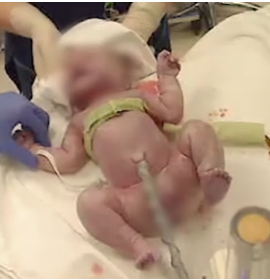
EIT involves putting a special 1 cm thick EIT belt around your baby’s chest. The belt is made of a silk-like material that will not stick to your baby’s skin or interfere with breathing (see picture to the left). The EIT belt will be coated with warm ultrasound gel before being gently placed under your baby’s back, and gently wrapped around the chest. The process will take 10-20 seconds but sometimes we may have to gently lift your baby slightly off the bed to put the belt on properly.
We will try to place the EIT belt when the medical team are handling your baby for other reasons. We will never place the belt on your baby if the medical team say it is not appropriate to do so. We will then take 4 x 10 minute EIT imaging recordings over an hour. After the recording period, we will remove the EIT belt until the next time a medical team member has to handle your baby for routine medical care. Since EIT can be used to monitor a baby’s lungs in the NICU, sometimes we may keep the belt in place during that time if the doctors and nurses want to continue the use the EIT for your baby.
We would also like to take images of your baby’s lung with EIT and lung ultrasound at 14 and 28 days after birth, and when your baby is 36 weeks’ post-menstrual age (4 weeks before the expected due date). If practical, we will also try to take pictures on Day 1 and Day 2 after birth.
We are hoping to learn important information about your baby’s lungs and if you want, we can give you a copy of the images of your baby’s lung.
We will also record information about your baby’s health and treatment during their stay in the NICU. There will be no interruption to your baby’s care by participating in this study.
After your baby goes home, we would like to assess their lung function, general health, and development when they reach 1- and 2- years of age. These assessments will be performed at the Royal Children’s Hospital (Melbourne) or a participating site by a research team member. You will be asked to complete a health questionnaire and additional lung ultrasound and EIT pictures may be taken. At this visit, a study doctor or nurse may want to listen to your baby’s chest with a stethoscope. This visit will take approximately 1-2 hours. A member of the research team will contact you closer to the follow-up timepoint to organise the appointment for a time that is mutually convenient for you to attend.
By participating in the BLUEPRINT Study, you are giving permission for the co-ordinating study team at the MCRI to contact you closer to your baby turning 1- and 2-years of age, to organise the follow up appointments. The study team at your hospital will ask for the best method of contacting you.
You will be asked to provide consent for the collection of your baby’s blood during the research study. The 2 blood samples collected from your baby will be processed in the local hospital laboratory and stored for up to 3 months before being transferred to the Murdoch Children’s Research Institute (MCRI) which is the central site for this study. Your baby’s samples will then be sent to the Baker Heart and Diabetes Institute to identify proteins that can predict different lung phenotypes and chronic lung risk.
Your baby’s samples will be labelled with a unique study ID code that will have been assigned at the beginning of their enrolment in the study. This ID code will not include any personal identifiers, such as name, medical record number, date of birth, postcode, or telephone number. Only site study personnel will have access to the master list which links your personal details with your unique ID code; the researchers performing the testing and analysis of your baby’s blood samples will not have access to this information.
Any leftover blood samples will be kept at the MCRI in a “Biobank” established for the BLUEPRINT Study for long-term storage (up to 10 years), During this period, these leftover samples may be used for purposes related to the BLUEPRINT Study that are not documented in this consent form. This is called “extended use” where we request extended consent to use these samples for related research only. Extra testing may be performed on these samples but will be disposed of as per standard laboratory procedures once analysis is completed.
There is no direct benefit to your baby for taking part in this study. We believe this study will provide valuable information about how we care for babies born preterm in the NICU and after they go home. If our new blood tests and tools are successful in detecting lung problems in the early stages of a baby’s NICU stay, this will be important in helping to improve the care of other babies requiring breathing help in the future.
Our lung imaging equipment is more sophisticated than the equipment we currently have available in the NICU. It is possible that we may detect information about your baby that the doctors don’t know about. In this case we will immediately tell the team treating your baby.
Participation in this study will not place your baby at any greater or extra risk beyond those that normally come with standard NICU care. Procedures for this study, such as lung imaging (EIT and lung ultrasound) will only be performed if the medical team looking after your baby says it is safe to do so. Extra handling of your baby may be required to fit the lung imaging devices, however, the medical team looking after your baby will coordinate with normal handling that occurs during the routine care of your baby to minimise disruption or discomfort. There is a possibility that the EIT belt or lung ultrasound procedure may cause irritation, minor damage to the skin or lead to infection, however, this risk is similar to the risk associated with any medical device that touches the skin. The medical team will take measures, such as using sterile equipment and visually inspecting the skin before and after the procedures to minimise these complications.
For all large studies like BLUEPRINT, a safety committee is set up to monitor the study. The committee is a group of independent doctors and scientists who have reviewed and agreed to the study. They will monitor the study safety issues at all the hospitals involved. If they find unexpected problems, the study will be stopped or changed to reduce any risks to babies.
Yes, the BLUEPRINT Study is interested in understanding how normal NICU care influences your baby’s lung growth and health. Your baby will continue to receive the care the doctors and nurses consider best for your baby while taking part in this research study.
Yes, if you decide to withdraw your baby from this research study at any time, please notify a member of the research team before doing so. If you do withdraw consent during the research project, the study doctor and relevant study staff will not collect additional personal information from your baby, although personal information already collected will be retained to ensure that the results of the research study can be measured properly and to comply with law. You should be aware that data collected by the Sponsor (MCRI) up to the time you withdraw your baby will form part of the research study results. If you do not want them to do this, you must tell them before your baby joins the research study.
Your baby’s involvement in the BLUEPRINT Study will end when they are 2 years old (age at last lung health and growth assessment). The medical team at your baby’s NICU will keep you informed of your baby’s progress whilst staying in the NICU. After your baby goes home, a member of the MCRI Research Team will contact you at approximately 6-9 months and then 18-20 months to organise appointments to assess your baby’s lung health and growth. When the study is completed, we will send you a summary of the results.
If you have any questions, please speak to your hospital medical team.
All information about you and your baby’s health will be kept private and confidential. The only people allowed to look at the information will be the doctors who are running the study, the staff at the MCRI (Study Coordinating Centre), and the regulatory authorities who check that the study is being carried out correctly. A privacy note is also available on the study website.
No, joining the clinical study is voluntary. If you do not wish for your baby to take part, they do not have to. If you decide that they can take part and later change your mind, you are free to withdraw your baby from the study at any stage.
Your decision that your baby can or cannot take part, or that they can take part and then be withdrawn, will not affect their routine treatment, relationship with those treating them, or their relationship with their treating hospital.
There are no additional costs associated with participation in this clinical study whilst in the NICU, nor will you or your baby be paid. All medication, tests and medical care required as part of the research study will be provided to your baby free of charge. There may be reimbursement of travel costs for lung health assessments at the Royal Children’s Hospital or another participating if required.
This research project is being conducted by the BLUEPRINT Study group, headed by Prof David Tingay at the Murdoch Children’s Research Institute, Melbourne, Australia.
This research has been funded by the National Health and Medical Research Council (NHMRC) Clinical Trials and Cohorts Scheme Grant (Grant #2024039). There is no commercial sponsorship or funding for the BLUEPRINT Study.
No member of the research team will receive a personal financial benefit from your baby’s involvement in this research study.
Our partners